
Disconnecting From the Digital
As a teenager, social media is all around me constantly. From people taking pictures at a basketball game to post later on social media, to jokes from a new trending audio or video, to the new hot topic people are talking about, social media has become integrated into teenagers’ and youths’ everyday lives.
The Science of Social Media
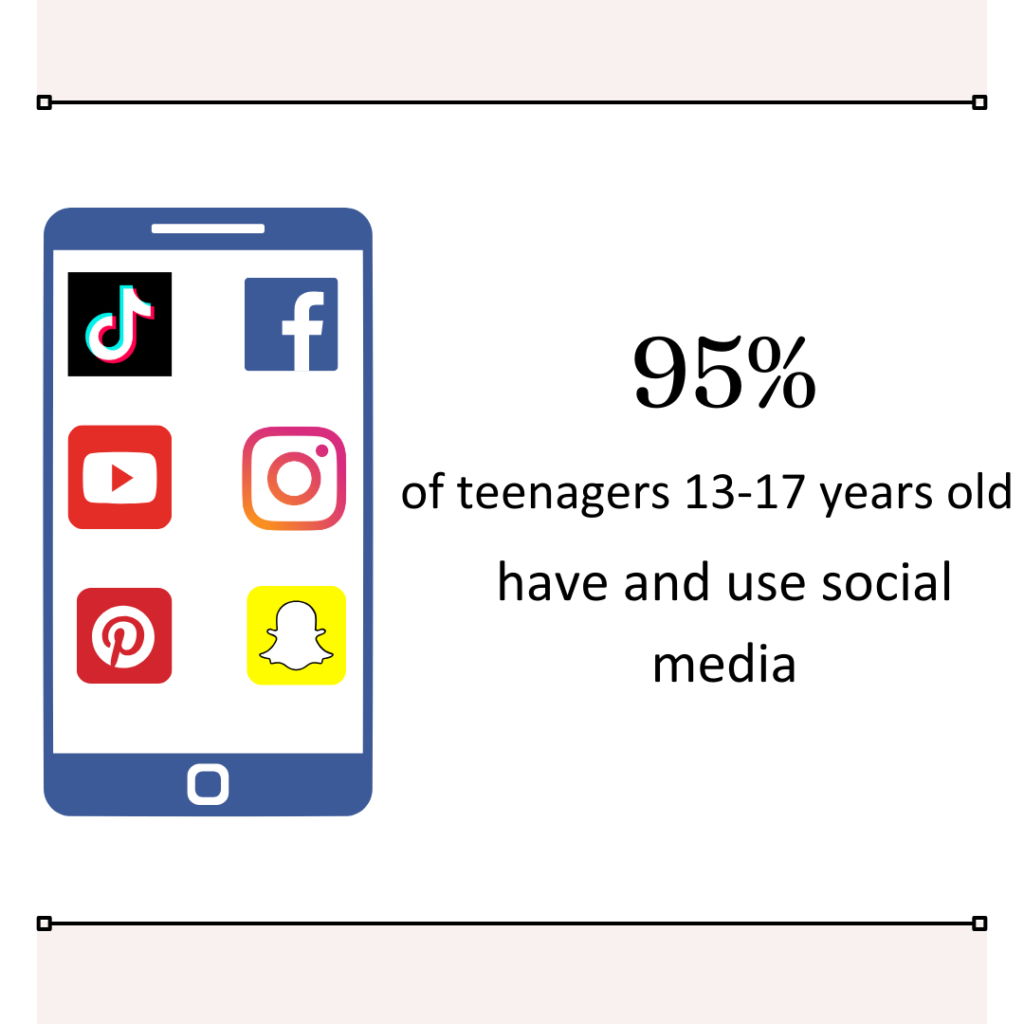
According to a survey taken by the Pew Research Center, 95% of teenagers from the ages of 13-17 use or have social media platforms. Keegan Lee, a mental health advocate from Burlington, North Carolina, was one of the 95%. Keegan shared how in 2020, during the height of the pandemic, she, along so with many others, became obsessed with social media. She was constantly scrolling through social media. Likes and dopamine hits from receiving online praise kept her trapped in the online world of social media, ignoring the real world. The more obsessed with social media she became, the more her mental health suffered. Keegan is just one example of each children and teenagers who is struggling with an addiction to social media.
In 2021, Keegan took charge of her own well-being and deleted social media for 60 days. She journaled her thoughts and feelings everyday of her journey to see how social media was truly affecting her life. What she found aligns with much of the research present today.
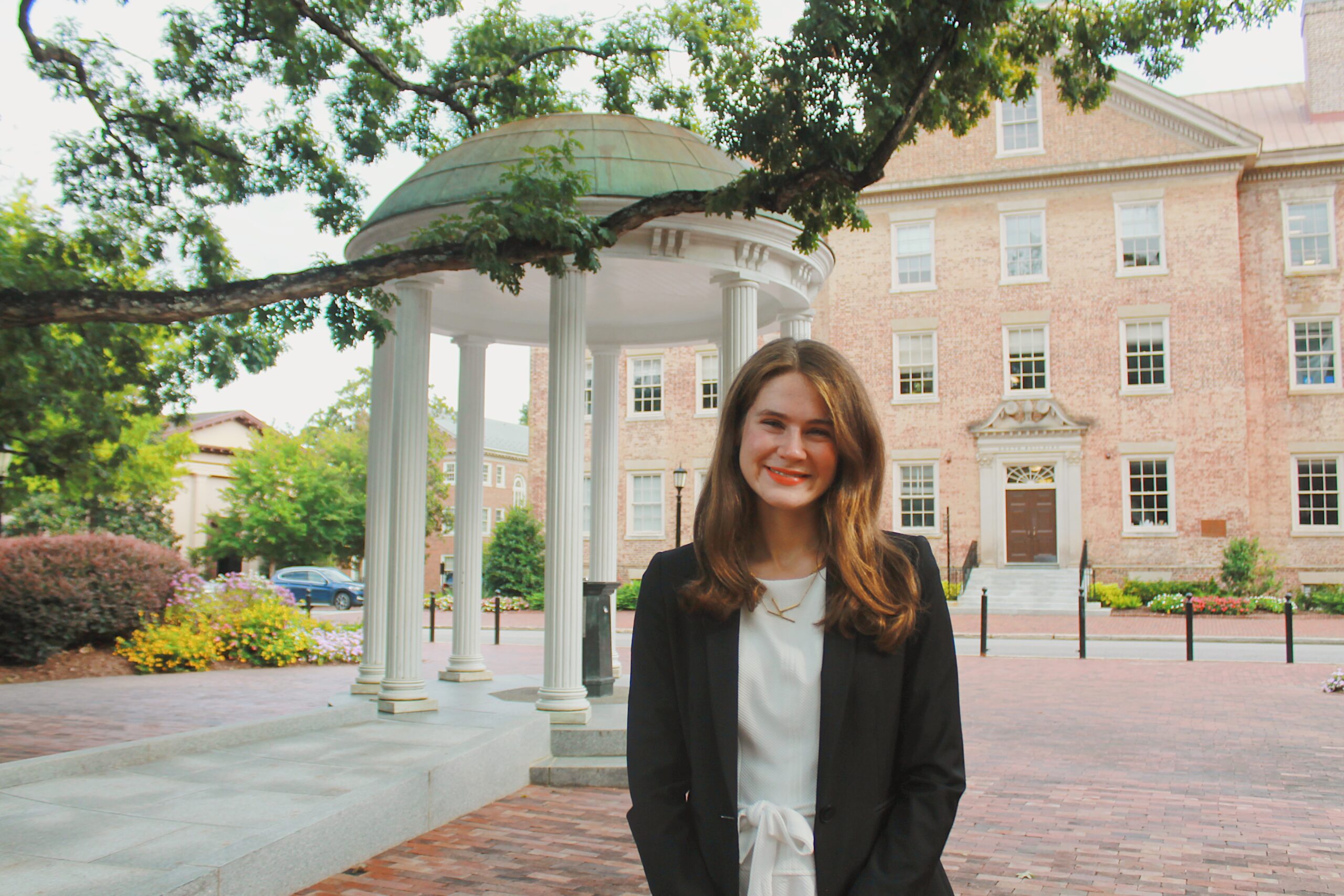
“And so I think that as someone who is not anti social media, who sees the good in it… we have to grow with it and we have a responsibility, as do tech companies, to regulate the negative side”.
– Keegan Lee
Social media is relatively new, which means the science behind both the harms and the advantages is ever- growing. There are many concerns with social media, especially among youth. Currently, there is science to back up the idea that it is both a positive and negative tool for youth, but the negatives are greatly outweighing the positives.

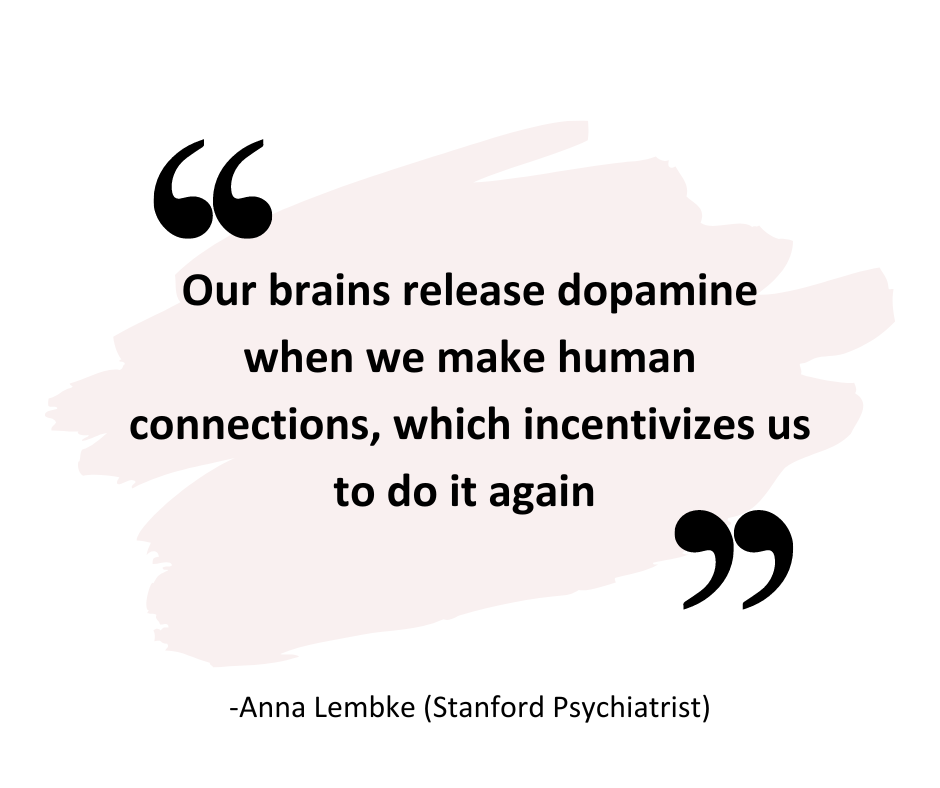
The reason that social media can be incredibly dangerous for youth was highlighted in The U.S. Surgeon General’s Advisory Social Media and Youth Mental Health stating, “Frequent social media use may be associated with distinct changes in the developing brain in the amygdala (important for emotional learning and behavior) and the prefrontal cortex (important for impulse control, emotional regulation, and moderating social behavior), and could increase sensitivity to social rewards and punishments”(5). Children’s and teenagers’ brain development and chemistry are being altered by social media resulting in an addiction. Social media is turning these likes, posts, and the content created into what our brain perceives as human connection, making us addicted to social media.
The danger is not just in what adolescents are seeing or watching on social media, but also from posting in hopes to get likes. Children are especially susceptible to comparing themselves to others on social media. From ages 13-17, the brain is susceptible to mental health challenges such as peer pressure, comparison, and depression.

“I think what I really try to focus on is the beauty of the digital world and our responsibility as human beings to grow with it so that we can sustain the most essential forms of human connection, which is face to face interaction”
-Keegan Lee

There is good that can be found in social media. It has been shown to help marginalized and minority groups find a sense of connection and it has also helped bring awareness to many mental health concerns for teenagers (The U.S. Surgeon General’s Advisory 6).
Much of the research points us to limiting social media usage.
Why is it so hard for teens to limit their social media usage?
Keegan shared with me that she was worried about deleting social media from her phone. She was anxious about how she would be perceived, as many of us are. We are constantly driven by our own assumptions of what others are thinking about us. Keegan was mainly worried about what she would miss out on: the trends, the funny videos, the connection to her friends. “Would people reach out to me,” she wondered.
Adolescents are driven by dopamine, which Stanford Medicine defines as “The main chemical involved in addiction, is secreted from certain nerve tracts in the brain when we engage in a rewarding experience such as finding food, clothing, shelter or a sexual mate. Nature designed our brains to feel pleasure when these experiences happen because they increase our odds of survival and of procreation.”
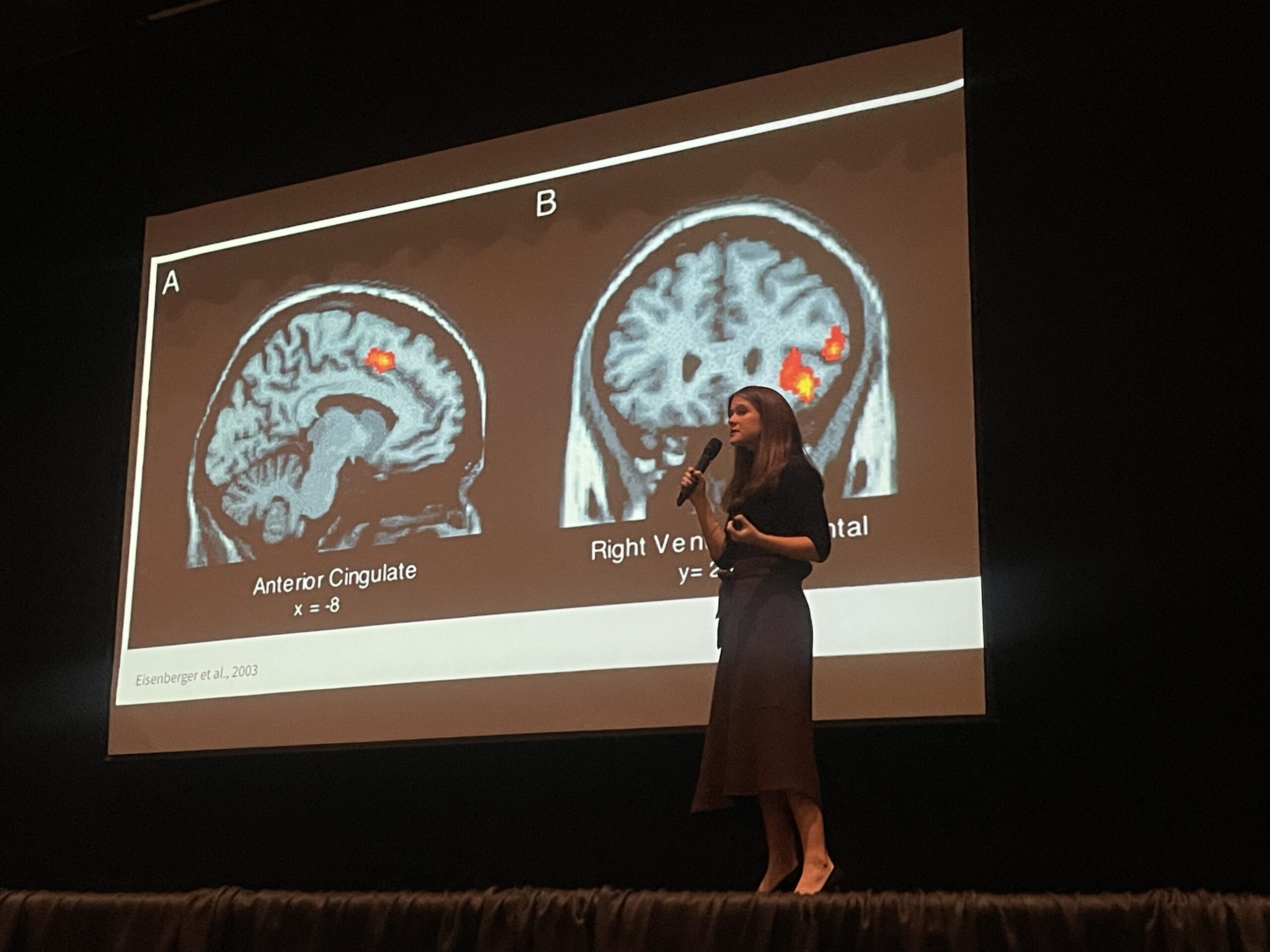
Teenagers are finding this dopamine hit through social media, but it is short term dopamine, which means it only lasts for the second that it is firing in the brain instead of staying with the person long term. This is dangerous because social media is endless. You will never scroll to the end of TikTok, never watch all of the youtube videos, and will never see the last instagram post. Adolescents are starting to rely on short term dopamine. The more we rely on short term dopamine, the shorter our attention span, the harder it is for us to obtain long term dopamine. Social media has also been found to correlate with higher levels of depression. Based on a college survey published in the American Economic Association showed a correlation between social media usage and 300,000 new cases of depression among college students.
Who Is Responsible and What Should They Do?
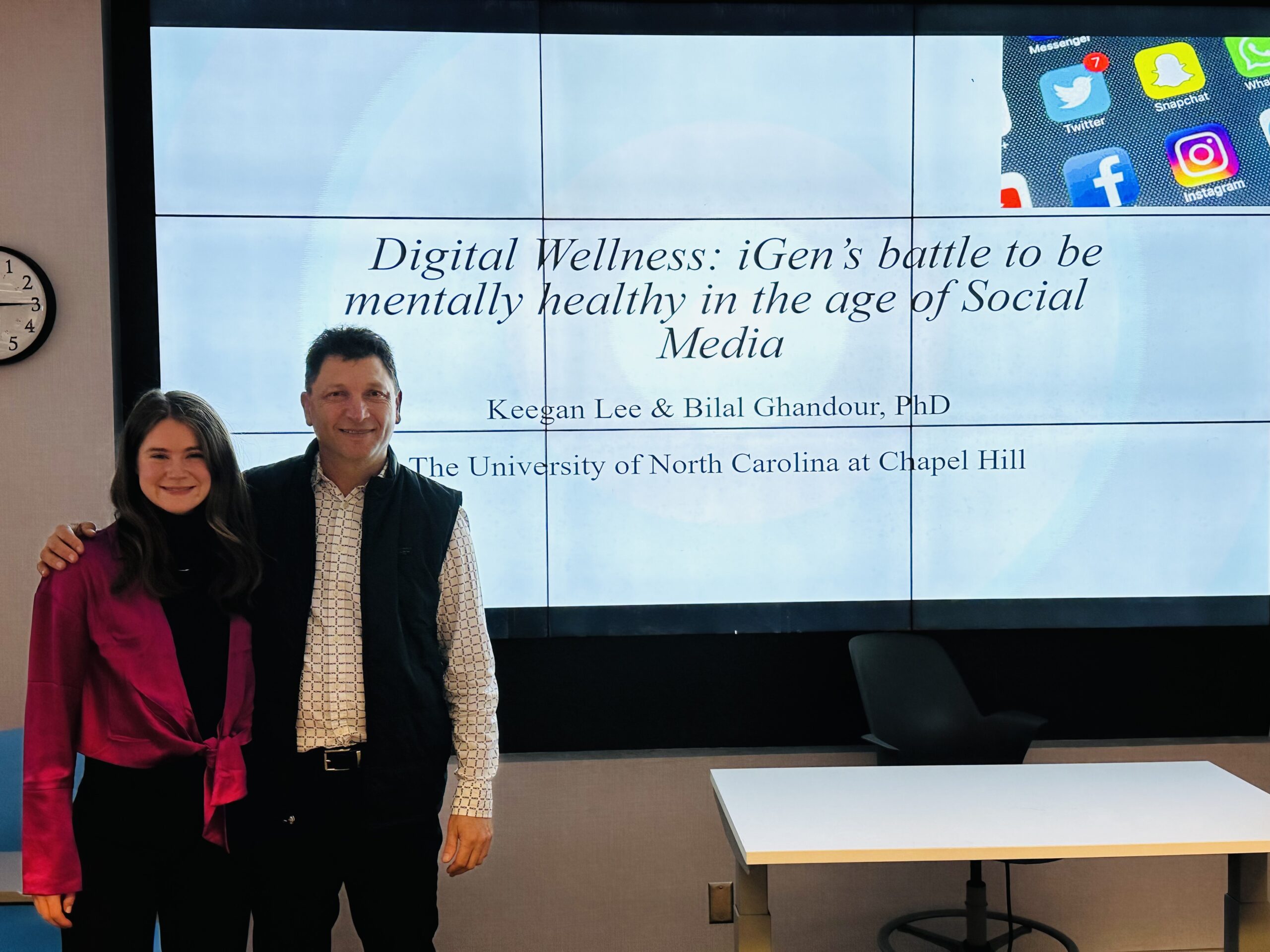
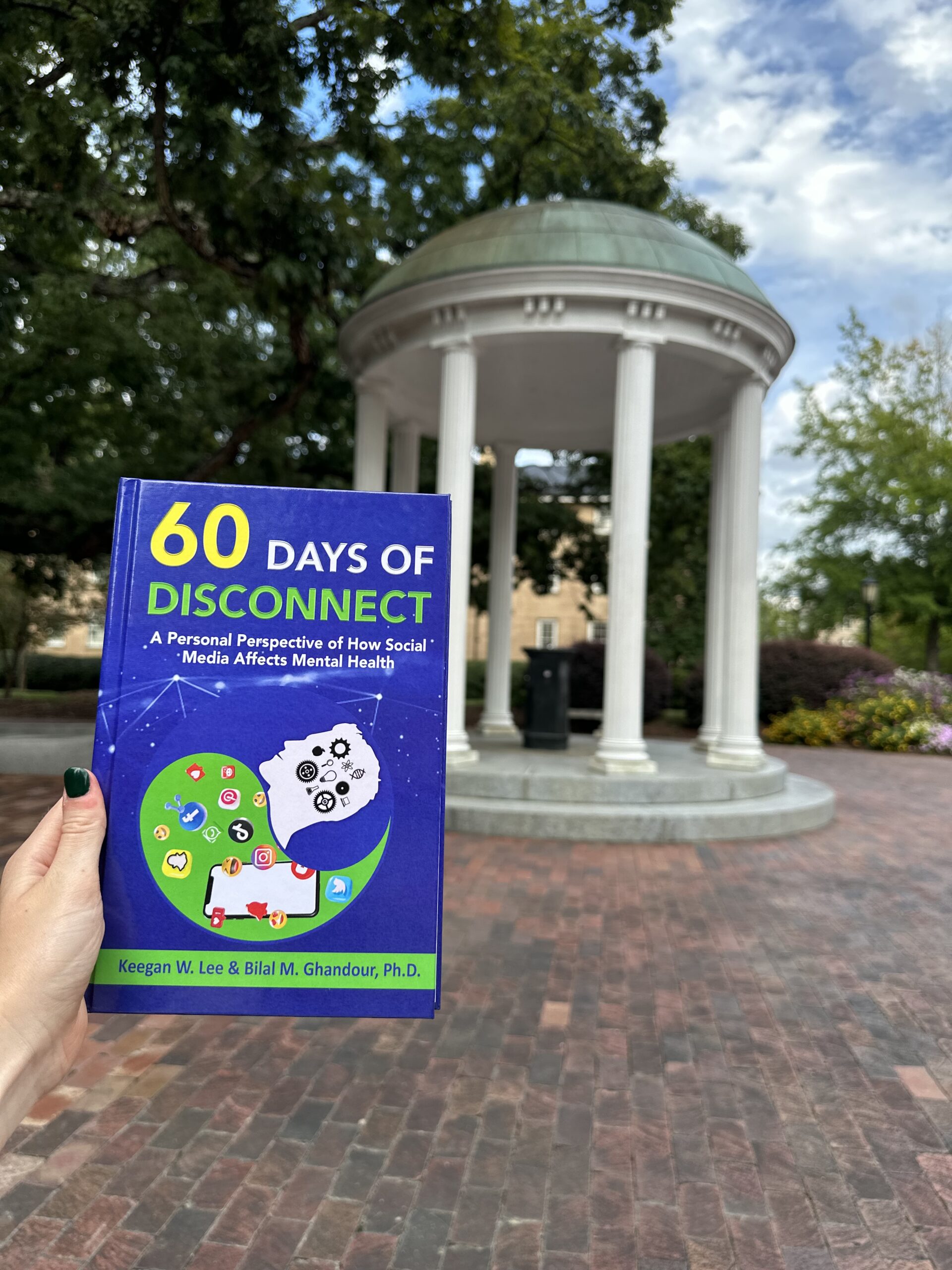
Keegan knew she was not alone in what she was feeling and journaled everyday for her 60-day journey. She compiled her journal entries with research done by an Elon professor of psychology Bilal Ghandour for their book 60 Days of Disconnect. Their book is helping to inspire and teach teens about the harmful effects of social media and how to combat them. Keegan often says that she loves social media and sees the beauty in it, but that we must stay informed about the harm it could be doing.
Throughout the book, her journal entries along with the research from Dr. Ghandour teaches us ways to have healthy boundaries with social media. The book also breaks down the algorithms and has highlighted ways that parents can get involved with helping their children create healthy social media practices. Keegan shared that the responsibility is within all of us, those who use social media, parents in helping their kids create health boundaries with social media, and technology companies and policy makers in working together to create a healthy online world for the youth.

“I want to continue to be on the verge of knowledge through research; I want to teach the youth and I want to help people through medical treatment in terms of mental health”
– Keegan Lee
Parents
Pew Research found that 81% of parents believe that social media companies should require parental consent to have social media platforms. While most parents want this, many teens would be able to find ways around these guidelines. The best way to foster true practices is with open conversations between parent and child. Taking away social media, a phone, or telling a teen they simply cannot have social media is proving to be ineffective. With so many of their peers having social media and teenagers being prone to conform to peer pressure, having open conversation between parent and child is the best way to create healthy social media practices. The American Psychological Association found that “Research suggests that setting limits and boundaries around social media, combined with discussion and coaching from adults, is the best way to promote positive outcomes for youth.” Limiting social media use has proven to improve life satisfaction, feelings of gratitude, lessening feelings of comparison, and also lead to improved feelings of happiness. Explaining to teenagers the dangers of social media and supporting them with time limits and safe practices is the best way for parents to combat the negative effects of social media.
These same results are also supported by Keegan’s journey and her story. She shared that during her time away from social media and afterwards, she felt that she was more patient and had a longer attention span. She was able to focus better after 60 days of not being on social media. She felt freer from the comparison she had been so drawn to do before. The 60 days that Keegan took is especially important to note as stated by Stanford Psychologist “a whole month is more typically the minimum amount of time we need away from our drug of choice, whether it’s heroin or Instagram, to reset our dopamine reward pathways.”
Teenagers are receiving short term dopamine hits due to social media. The American Psychological Association shared “Removing devices can feel punitive. Instead, parents should focus on encouraging kids to spend time with other activities they find valuable, such as movement and art activities they enjoy,” Encouraging children to find other outlets, healthier outlets for the feelings that social media gives them, will self drive the youth to stay off of social media. Youth that have other outlets for dopamine and community spend less time on social media and therefore are less susceptible to the negative effects of social media.
Policies and Technology Companies
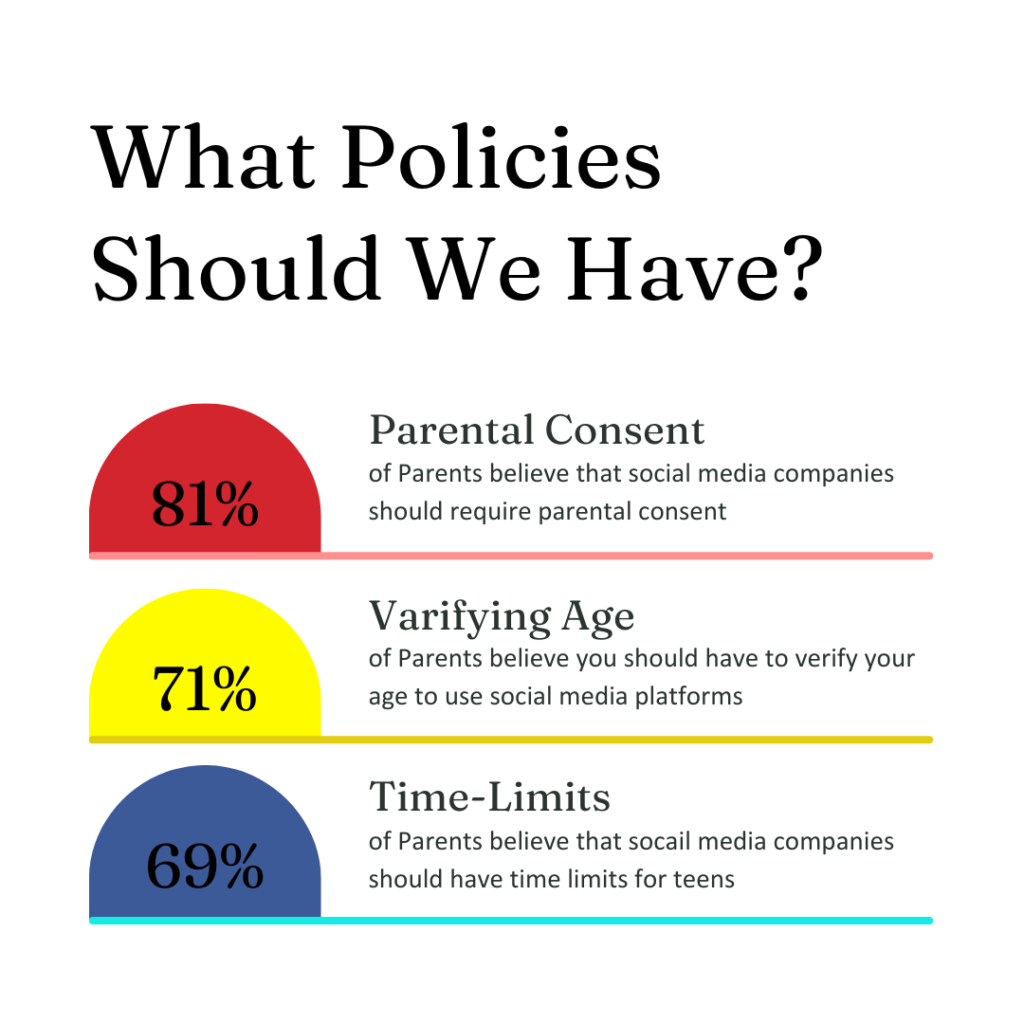
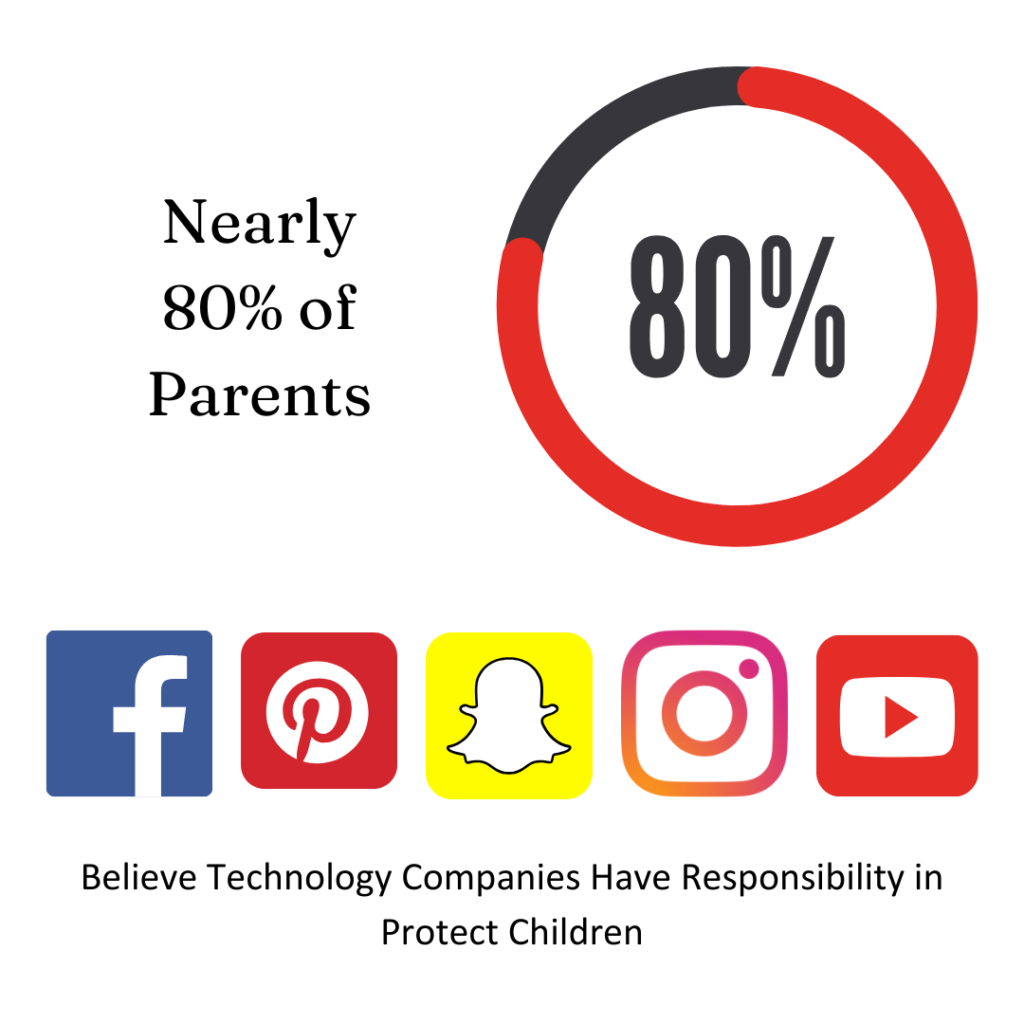
Nearly 80% of parents believe that tech companies have a responsibility in protecting children (National Library of Medicine). Additionally, legislatures have pushed for policies that would require parental consent under the age of 18 for social media platforms. The agreement of these policies is found to be bipartisan, both a majority of democrats and republicans agree that there should be parental consent for children (Pew Research).
Given the research provided, it has been shown that limiting social media use has increasing positive impacts. “Adolescents who spent more than 3 hours per day on social media faced double the risk of experiencing poor mental health outcomes including symptoms of depression and anxiety”(The U.S. Surgeon General Advisory 5). Over a third of youth said that they use social media “almost constantly” (The U.S. Surgeon General 3). Creating parental consent requirements, verifying age, and enforcing time limits for teens are a few ways that technology companies can implement policies to help increase the benefit of social media. Limiting the amount of time on social media also incentives users to form connections and find ways to obtain the dopamine given from social media in other, longer lasting, ways. Social media has many benefits and technology companies can help to highlight the benefits by abiding by policies that combat the negatives of social media.
Keegan supports many of these policies based on her personal experiences and research she has conducted. Now studying as a psychology major, Keegan is working towards making her mark in the research world of psychology while also fueling her passion for teaching. Keegan now works as an advocate for youth mental health and is traveling along the east coast, speaking at many conferences and colleges to educate about ways to combat the negative impacts of social media so we can enjoy the beauty it can bring.
Sources
Anderson, Monica. “81% of U.S. Adults – versus 46% of Teens – Favor Parental Consent for Minors to Use Social Media.” Pew Research Center, Pew Research Center, 31 Oct. 2023, www.pewresearch.org/short-reads/2023/10/31/81-of-us-adults-versus-46-of-teens-favor-parental-consent-for-minors-to-use-social-media/#:~:text=Legislators%20have%20pushed%20for%20mandatory,for%20these%20types%20of%20policies.
Goldman, Author Bruce, et al. “Addictive Potential of Social Media, Explained.” Scope, Logo Left ContentLogo Right Content Scope Stanford University School of Medicine blog, 2 Feb. 2024, scopeblog.stanford.edu/2021/10/29/addictive-potential-of-social-media-explained/
Office of the Surgeon General (OSG). “We Must Take Action: A Way Forward.” Social Media and Youth Mental Health: The U.S. Surgeon General’s Advisory [Internet]., U.S. National Library of Medicine, 1 Jan. 1970, www.ncbi.nlm.nih.gov/books/NBK594760/.
The U.S. Surgeon General’s Advisory. Social Media and Mental Health, 12 Oct. 2023, pp. 65–118, https://doi.org/10.1017/9781009024945.010.
Weir, Kristen. “Social Media Brings Benefits and Risks to Teens. Psychology Can Help Identify a Path Forward.” Monitor on Psychology, American Psychological Association, 1 Sept. 2023, www.apa.org/monitor/2023/09/protecting-teens-on-social-media.